
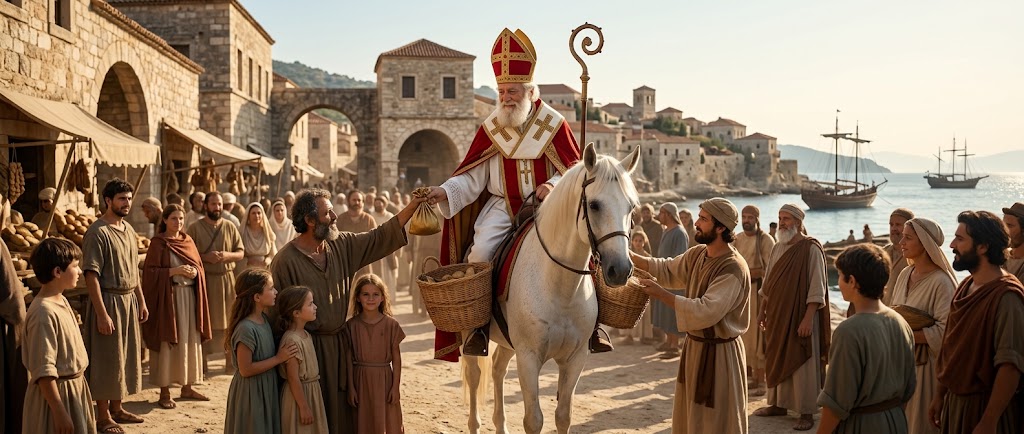
Every year in the dark month of december, young and old look forward to the moment when the beloved saint makes his grand entrance. The red robe, the white beard, and of course the sack full of treats and presents have become an essential part of our culture. But where does this tradition actually come from? Who was the man behind the mitre, and why have gifts been inextricably linked to it for centuries? Dive into the rich history of one of our most beloved folk traditions.
From historical bishop to legendary figure
The origins of our Sinterklaas celebration lie in the early middle ages and are based on a real person: Nicholas of myra. He lived in the fourth century AD and was bishop of myra, a city in modern-day turkey. Over the centuries, numerous legends arose about his life, but the common thread in all these stories is his unprecedented generosity and his care for the poor and vulnerable in society.
One of the best-known tales about nicholas is about a poor father who had no money to pay dowries for his three daughters, leaving them unable to marry and facing an uncertain future. According to legend, the bishop decided to help in secret. For three nights, he secretly tossed gold coins through an open window or down the chimney, which happened to land in the shoes left out to dry by the fireplace. This story is widely considered the historical starting point of putting out shoes and handing out presents.
The evolution of the celebration through the centuries
After his death, the popularity of saint nicholas quickly spread far beyond the borders of asia minor. He was proclaimed the patron saint of children, sailors, schoolchildren, and unmarried women, among others. His feast day, december 6th, was celebrated in catholic countries as a holiday where the poor and children were remembered with small gifts and treats.
Over the centuries, the character of the celebration changed significantly. During the reformation in the sixteenth century, the open celebration of catholic saints was banned in many regions. Yet the figure of Sinterklaas tenaciously persisted as a folk custom, albeit in a more secular form. The celebration shifted from a purely religious commemoration to a domestic party full of mystery, excitement, and togetherness.
Why we give gifts on gift-giving night
Giving gifts symbolizes generosity, looking out for one another, and showing appreciation. At a time of year when days are short and nights are cold, the Sinterklaas celebration offers a warm opportunity to spend time with family and friends. In the past, these were often symbolic gifts such as fruit, nuts, or a spiced biscuit doll, but as prosperity increased, the presents became more elaborate.
Handing out gifts also took on a playful element. The Sinterklaas celebration is pre-eminently a moment when we surprise each other, sometimes with a wink or a teasing poem poking fun at someone's good traits or little quirks.
The celebration today
Modern celebrations may look different than they did a few centuries ago, but the core value remains unchanged. Whether you are making creative surprises with poems for your friend group or simply drawing names within the family, it is all about the shared preparation and the excitement of the moment. To ensure that gift night goes off without a hitch and nobody ends up bitterly disappointed with three identical books, it is handy to make good arrangements in advance. This way, you can easily share your wishes using a handy kerstlijst.be-style wish list module, so the gifts perfectly match everyone's expectations.
The tradition of Sinterklaas shows just how powerful stories and customs can be. What once began as the secret charity of a fourth-century bishop has grown into a heartwarming annual ritual where generosity and connection take center stage. And that is something that never goes out of style.